

What's the Ideal Humidity Level for Your Home?
In the Atacama Desert in Chile, the air can be super dry, with humidity dropping to as low as 5%, while over in Hilo, a city in Hawaii, it can get super muggy, reaching up to 90% humidity.
Doctors say both extremes aren't great for living in. So, what's the ideal humidity level for your home?
Humidity is all about how much water vapor is hanging out in the air. It's super important for both understanding the weather and making sure your home feels comfy and healthy. There are two main ways to talk about humidity: relative humidity and absolute humidity.
1. Relative Humidity (RH): This is the go-to way to measure humidity. It tells you how much moisture the air is holding compared to the max it can hold at a specific temperature, shown as a percentage. Since warm air can hold more moisture than cool air, relative humidity can change with the temperature, even if the actual moisture in the air stays the same.
2. Absolute Humidity: This one's about the actual amount of water vapor in the air, no matter what the temperature is. It's usually shown in grams of moisture per cubic meter of air (g/m3).
Indoor Humidity Standards
The right humidity level can vary depending on what the space is used for.
The amount of moisture in the air really affects how hot or cold we feel – the more moisture, the warmer it seems. This is a neat trick to save some cash on heating in the winter. If the humidity level goes from 25% to 50%, it can feel like the temperature has gone up by about 2°C (around 3.6°F).
For Homes and Apartments
- In warmer months, in living rooms and bedrooms, the sweet spot for humidity is between 30% and 60% (with 65% being the max).
- In colder months, it's between 30% and 45% (60% being the max). The reason for the big gap in winter is because cold air from outside, when it comes into a heated home, gets warmer, and the relative humidity can drop a lot, sometimes down to 15-20%.
Keeping summer humidity levels indoors can be tough for builders and maintenance folks, which is why there's such a range in those numbers (the standards are mainly for them, not so much for the people living there).
When humidity dips below 30%, a lot of adults start feeling uncomfortable, with dry skin, scratchy throats, and other not-so-fun symptoms. Plants don't like it much either; they can start drying out and looking sad.
The World Health Organization suggests keeping indoor humidity between 40% and 60%. This level is best for people and pets to feel good, and it's also not great for mold, viruses, and bacteria to grow and spread.
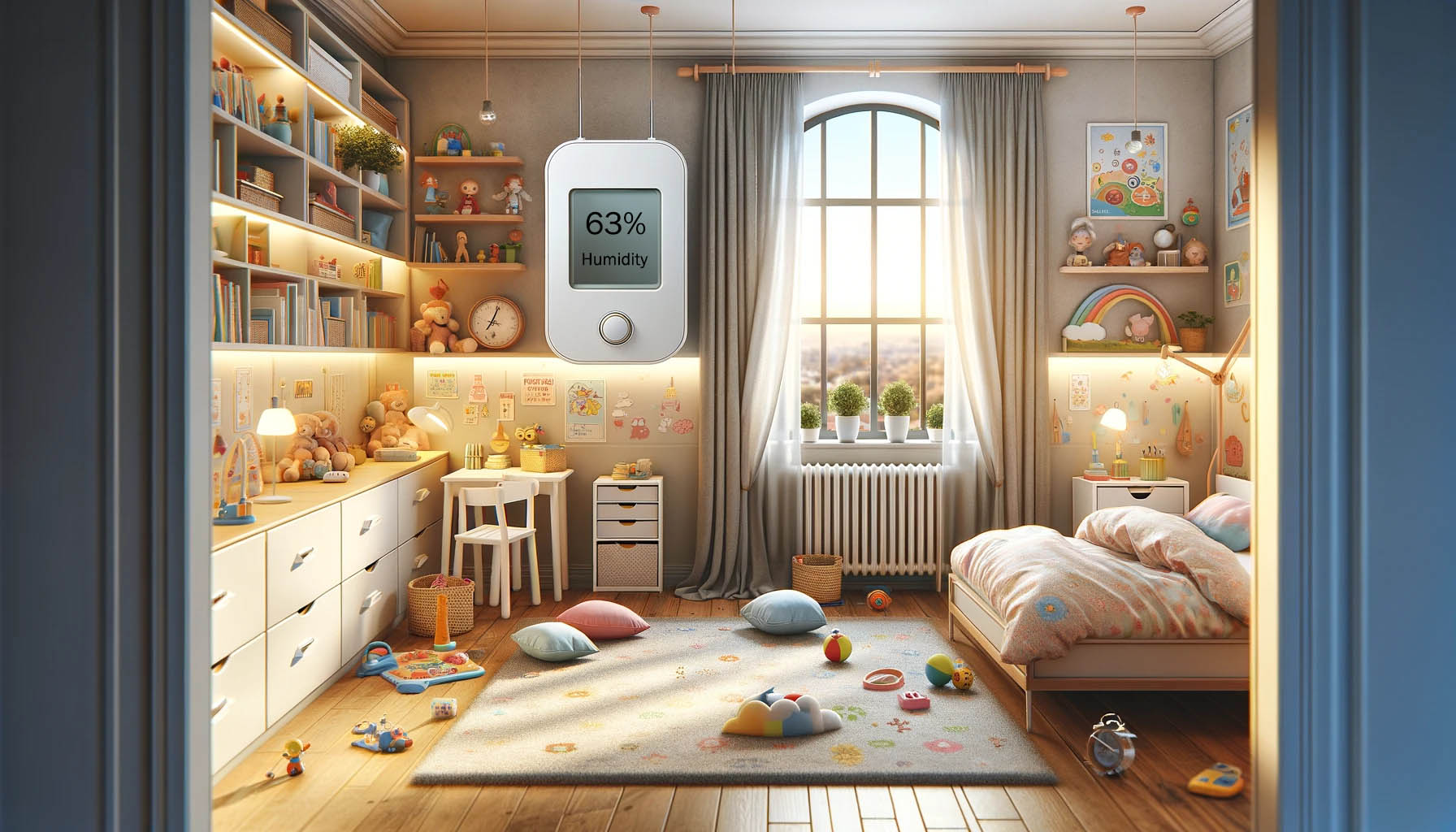
For children's bedrooms:
Children react differently to their environment compared to adults. They are more susceptible to getting sick, feeling too cold, or becoming overheated.
This is why the ideal humidity level for a home with children varies. Pediatricians suggest maintaining it between 50-70% with an average room temperature of 18-19°C (around 64-66°F).
Air that's too dry can force a child to use their own body's moisture to humidify it, which is challenging as their bodies contain less water and salts.
Dry air can lead to dried mucous membranes, making it tougher for them to ward off infections. This can also cause issues with feeding due to stuffy noses, tummy aches, and other discomforts.
When a child is ill, pediatricians recommend increasing the humidity to 70% to aid in their recovery.
However, it's important not to overheat the room, as this can create a tropical-like environment that prevents proper cooling through perspiration, resulting in excessive water loss.

For workspaces:
The same comfy humidity level for homes works for offices too.
Some American scientists found out in the Wellbuilt for Wellbeing program that workers in offices with air humidity lower than 30% deal with stress worse.
For greenhouses and conservatories, it's 55% and up to keep the plants happy and growing.
How to adjust humidity:
Knowing what your home's humidity should be and what your hygrometer (or another measuring device) says, you can tweak it yourself or use humidifiers/dehumidifiers.
For dry air:
Not enough moisture isn't good for people's health:
- It weakens the immune system.
- Increases the risk of asthma attacks and allergies.
- Makes your skin, nails, and hair tips worse.
- Dries out mucous membranes.
- Can cause headaches, drowsiness, and poor concentration.
You can boost humidity with any household humidifier or simple home remedies: placing bowls of water or an aquarium around, hanging wet towels and clothes, doing regular damp cleaning, etc.
If you open windows in winter to air out, remember, it won't make the air more humid. Actually, the temperature change will lower the humidity. But in warm, rainy weather, airing out can really help; how much depends on the temperatures inside and out.
By the way, if you don't notice a big change right after setting up a humidifier, wait a week. The air might have been really dry, and the moisture could have been soaked up by your ceiling, walls, and wooden furniture first.
For too much moisture in the air:
If the humidity goes over the recommended levels, you might run into problems like:
- Rhinitis, itching, irritation, and other allergy reactions because of dust mites and mold thriving (they love it when humidity is above 70%);
- Formaldehyde intoxication since too much moisture can make things like particleboard partitions, plywood cabinet walls, laminate, and other building materials and furniture components release this toxic gas. Symptoms include nausea, a scratchy throat, and burning eyes;
- Asthma attacks due to constant dampness and stuffiness;
- Overheating and heatstroke because of increased heat transfer.
Getting the humidity right can involve setting up a dehumidifier, airing out the place in winter, making sure your kitchen and home have proper exhaust and ventilation to avoid condensation, finding and fixing leaks in plumbing and sewage pipes, among other methods.
Relative humidity isn't static; it changes based on how many people are in a room, the season (it's drier in winter than in summer), nearby bodies of water, which side of the building you're on (north sides are usually more humid than south sides), and other factors. That's why it's a good idea to regularly check the actual levels, maybe with a climate monitoring system.
Tools to Measure Humidity at Home
You've got a few options to check out the humidity in your place:
1. Hygrometer: The go-to tool for home humidity checks. You can find analog ones that use physical elements to measure moisture or digital ones that use sensors to give you a readout. Many digital versions can also tell you the temperature, so you can keep an eye on both.
2. Psychrometer: This old-school method uses two thermometers, one wet and one dry, to figure out the humidity based on the temperature difference. It's more for science or industrial use.
3. Electronic Sensors: Often part of smart home setups or standalone devices that can adjust your heating or cooling based on the humidity.
4. Smart Home Gadgets: Lots of smart thermostats and air quality monitors now come with humidity sensors that let you keep track of things right from your phone.
Picking a Humidity Measuring Tool
When you're choosing a device, think about:
- Accuracy: Digital usually beats analog.
- Features: If you want to track temperature and humidity, get a device that does both.
- Smart Home Compatibility: If you've got a smart home, look for something that can hook into your existing setup.
- Budget: You can find something at almost any price point, from basic to high-end.
Keeping your home's humidity in the ideal range (about 30% to 50%) is key for staying comfortable, healthy, and avoiding damage to your place.
Make a healthy climate for you and your family!
© Wise Home Hacks